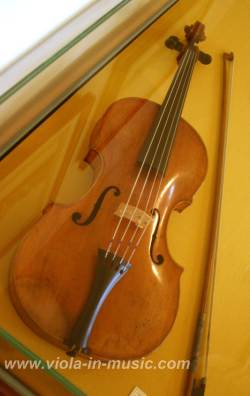
Blogger, realist, clarifier, if there is such a term. Truth teller, who's not afraid to admit I'm wrong. Hellacious, renegade violist and "computer whisperer"; was once accused of practicing the Dark Arts with systems.
I'm tougher than most and survived things that would have killed most women. I still love life. I was homeless, now I'm not. No longer in the 'hood. Now, somewhere in the Carolinas. The stories are priceless and endless.
I
love me some blues. I love playin' the blues, especially on dat non-fretted viola; dem slides and bends are marvelous! I love
listenin' to the blues. That being said, Clarence “Gatemouth”
Brown did not consider himself a blues player, although he did play
blues on the viola. I know smartasses who think violists get the
blues from playing the viola, but that's not true. We get the blues
from listening to violinists. Just kidding.
First 8 measures of "Blues at Dawn" by Clarence "Gatemouth" Brown from my collection. I just transpose on my viola.
Anyway,
I knew that when I chose this theme that I would write about
Gatemouth. His life does seem to be the stuff of blues, but I don't
really think he would have considered his life to be something that
one would write a bluesy batch of songs about. He was born in Vinton,
Louisiana, the heart of Delta Blues country, and began playing fiddle
(the same thing as a violin) at a young age; his father, a railroad
worker, played the fiddle and taught young Clarence. Subsequently, he
picked up the guitar, mandolin, harmonica and viola. During a
one-year Army stint, he was a drummer His professional life began
when he sat in one night for T-bone Walker. He walked on stage,
picked up Walker's guitar and made up a tune called “Gatemouth
Boogie” and made 600.00 in tips in 15 minutes. Afterward, Gatemouth
began to take his guitar playing much more seriously.
Typical Clarence "Gatemouth" Brown visage. Easy to see why he eschewed the term "Bluesman".
He
typically dressed in Western shirts and cowboy hats and called
himself an “American Musician”. He opined once, “Why do I want
to moan and groan about women bein' bad and all that?” This left
him free to explore different aspects of music and blend styles as he
saw fit. He played a mixture of deep blues, Cajun, jazz and swing. He
disdained deep delta blues, which he thought were too negative and
was dismissive of Robert Johnson, the great blues player, who with
only 27 recorded tunes under his belt and an untimely demise, became
the cornerstone for modern blues and is lionized by the likes of Eric
Clapton, Jeff Beck and Robert Plant. I've listened to Robert
Johnson's playing, and undoubtedly, he was great, but his greatness
lay in his inventiveness, and more than likely several months of
hard, hard practice. “Devil at the Crossroads” is a wonderful
myth, but Brown eschewed it, while Johnson's contemporaries, like Son
House and Willie Brown fed into the myth. Whether or not they truly
believed Johnson made a deal with the devil is conjecture.
Robert Johnson. In the mid-30s, he was playing in the deep delta juke joints and was recorded. 27 of his tunes have formed the basis for today's Blues and Rock. Every great artist from Eric Clapton, Jeff Beck and David Gilmour of Pink Floyd cite Johnson as a heavy influence in their artistry and development. Whether the Devil at the Crossroads had anything to do with it is another matter. Gatemouth thought it was a bunch of hooey, although he did respect and admire Johnson's artistry.
Whatever
it is, it just adds to the richness of time and place, which is all
important with the blues. There are Chicago and Detroit Blues Clubs
and I have been in both. There are Elton John Blues, which are a gimmick; I have never experienced the kind of raw
intensity that comes with listening to, or playing the blues that occur down here in the South. It's probably all a trick of the mind, but if
so, it's a powerful one. The blues evoke hot, sultry nights, despair,
loneliness and a deep longing for solace from the pain. Gatemouth
played tunes like this, but so very seldom.
I have to admit, in finding pictures that exemplify Gatemouth and his joy, fun and exuberance, there are a plethora. This is just one of many!
His
sets were filled with energy and fun. He had a tendency to swap out
his instruments within songs, so he would jump from violin to guitar
to harmonica. He'd pick up his viola and give it hell, tearing the
hair from the bow in his exuberance. His songs were more like Texas
Swing or something like the group Asleep at the Wheel. His sheer
bursts of enthusiasm and energy would bring an audience (mostly
drunk) to its feet in response to his liveliness.
This is just a small sample: "Okie-Dokie Stomp" If you like this, I ENCOURAGE YOU STRONGLY to listen to one of his hour concerts on youtube!
I
had the great, good fortune to see him perform twice. The second
time, we talked violas. Talk about a strange experience. I was
telling him about my Italian thoroughbred and he said, “do you let
him rip 'n' run?” I thought and nodding my head sagely, “yup, he
does it right purty, too.” Gatemouth laughed and signed my book of
Blues studies that he had a section in. I really cherish that.
I had been playing out of this book, "Blues Fiddle" by Julie Lyon Lieberman for many years, when Gatemouth first came to Tampa. I took it with me to the second performance that I went to, and with my heart in my throat, asked him to sign my book. We ended up talking about music and violas for a bit; he was funny and and his joy for life was apparent in everything he did.
Later
on in that concert, when I was feeling no pain, he picked up his
viola, and I jumped up on the table (we were outdoors, and most of
the patrons were drunk; this as at Skipper's Smokehouse in Tampa) and
yelled “Violas Rule!!!!” He said into the mic, “Don't hurt
yourself!” I clambered down off the table, and he launched into
something on his viola. All I remember is that it was lively and
energetic.
Clarence "Gatemouth" Brown
1924 - 2005
Grammy Award Winner and Iconoclast
That
was in 1999. In 2005, several days after Hurricane Katrina, Gatemouth
died at his niece's house in Orange, Texas. He had to be
evacuated from his house in New Orleans, and I read somewhere that he
lost most of his instruments. He died at the age of 81, of lung
cancer, which he had decided NOT to have treated. He had lived life
on his terms and went out on his terms and for that I respect him.
Still, I cannot help but feel a bit of the blues, when I think of a
world with no Gatemouth in it.
Yeah, yeah, I know. But in some alternate universe, there IS a #ROW80 a-boil, right now!
This is
probably the least, or most, reasonable reason (sic) for creating a
post, depending on your point of view, but as I am so damned sick and
tired of talking about me, me, me, rather than mi, mi, mi, fa,sol, la, ti, do, this will work in lieu of DaTScans, drooling,
eyesight with no depth perception, but 2 of everything, and general
dementia and hallucinating. In other words and other circles, a
typical violist.
So, I
got dem #ROW80 blues... in E minor, no less. The enharmonic, or
relative key is G Major, with 1 sharp (#) and Brahms' 4th Symphony and Tchaikovsky's 5th Symphony are written in E
minor. I always enjoyed playing these pieces, because the viola parts
are tough. Unlike Amadeus freakin' Mozart, who sucks, oh so
precociously and preciously and is so terrifically boresome, that the entire viola section falls into a stuperous coma.
Beethoven fixed that, when he jumped from the Classical to the
Romantic era in his 3rd Symphony (the “Eroica” not the
“Erotica” as some idiot typesetter put in a program once, along
with all of the orchestra's names misspelled. I underwent a sex
change and was “Marc Wallach”) in the 3rd movement in
about 16 measures. Plus, according to some historians, Ludwig and I
share the same birthday, just not the same year, har har. Vivaldi (who also taught Paganini; perhaps the greatest violinist ever) is
a sweet ride and so is Haydn, but Mozart is the lamest of the lame in
my book, with the sole exception of his "Requiem" which I haven't played, but sung Alto, and loved. Unjustified hero worship, in my not-so-humble opinion. Thank god, he's pretty avoidable.
My house is a Mozart-free zone and zero-tolerance does apply. Violators will be subjected to the Biebster for 80 hours. No exceptions.
In
mentioning different genres of music that I have played, it should be
mentioned that I was classically trained and in the Galamian school
of Pedagogy. Ivan Galamian was a noted pedagog in string teaching for
violin and viola. I studied with one of his students for a number of
years, but strictly classical repertoire. That previous paragraph meant nothing to anyone unless you were trained in the Suzuki method of playing violin, viola, cello or string bass. You know, with the tapes on the fingerboard? The idea was anyone who was possessed of a tin-ear and completely tone deaf could play a non-fretted string instrument. Trust me. You can't. You can however, piss off the rest of us and embarrass your parents.
Over the
course of my career in music, however, I had the opportunity to learn
and play every other kind of music and in just about every kind of
venue. I've even played on top of a swimming pool for a political
fund raiser, which was interesting. Not something I'd care to repeat,
though.
I
got dem Row80 blues...
nuthin'
here for me to do...
I
got dem Row80 blues,
'cause
A to Z is done and gone as well...
Row80
has me singin' the blues in the key of Hell...
'Cause
C# is a bitch of a key to sing
Next
tah-ime, I be a-singin' the Row80 blues,
I'm-a
goin' for the key of B minor, or maybe F minor
With accidentals 'n' double-sharps 'n' double-flats...
'n' that'll show them violinists... They can be a-singin' the blues...
Cause
they like to play ever' thing in e♭major, the most boring key on
earth, ever...
'n' they lubs dem a whoooole lotta Mozart. I got dem Row80 blues...
San Francisco Symphony and Corky Siegel Blues Band, 1971
These seem dated to me now, although I love playing Blues more than most other genres, because of being able to "bend" the notes.
Leonard Bernstein: Symphonic Dances from West Side Story
On the other hand, "Symphonic Dances from West Side Story" remains one of my favorite pieces to listen to and play. The Broadway production and movie had no violas, but the Dances do and the parts are difficult indeed. Still my favorite; I've played them as recently as 2006, with Maestro Coppola and they are still hard and awesome. Not dated one bit. Oh, yeah, the violas have to yell "Mambo!" in this.
I
played with Bernadette Peters several times and her music books
travel with her, as with all headliners, to all the local venues and
it is a tradition that the local backup players sign the backs of the
books. This way, I've kept up with my Detroit friends and other
friends over the course of my career. Violists are also a bored lot
and we're notorious for silly jokes. One of her standard tunes is
“Glow Worm,” and there is a passage where the violas are supposed
to sing “Glow Little Glow Worm, Glow.” The printed instructions
read “Sing.” A bit further on, they read “Play.” Some wag
went over this piece of music with a pencil and wrote, “play”
then “play and sing” then “sing and play” and then, “walk
and chew gum.” My stand partner and I, a youngster from the
Cincinnati Conservatory spent half a day getting over the snorts and
giggles from this. Of course, during that night's performance we had
forgotten and started laughing all over again. It doesn't help
either, that these artists love to showcase the players by seating us
on risers. Well, they told us to have fun.
The usual setup for one of these "show" orchestras is something like this. I'm not in this picture. I've probably been expunged from all publicity shots and sent to Valhalla or witness protection for violists, or something. Frankly, there's too much lame dripping off these folks. They're probably playing some Mozart, or "Babes in Toyland," Heaven Forfend!
So, from
classical to rock; from hip-hop to heavy metal, I've pretty much
played it all and I think that my favorite type of music to play is
either something like the second movement of Grieg's Cello Sonata,
adapted for viola in A minor, which has some awesome passage work in
the upper register, or Rachmaninoff's “Vocalise” for Viola and
Piano. This also has some great passage work in the upper registers,
but the lower notes can be played on the “C” string, in higher
positions, which really resonate on my viola. There are also the Max
Bruch Unaccompanied Viola Suites, which just flat out rock.
Ma looks drunk; I look stoned. I'm not, just in my bliss, playing my viola. I am 16 here.
Contrary
to what people may think, it's actually harder to play long, slower
passages and interpret them musically, then to play fast passage
work. That's like just plain ol' band music. I played in the Stage
version of Mel Brooks' “The Producers,” which was a hell of a lot
of fun, but it was just a bunch of 16th notes for about 80
pages. I played it for several weeks, so I was able to get a gander
at the goings-on onstage. My favorite part is of course, the song “Springtime
for Hitler,” where we get to depict WWII in 4 minutes, or 10. I
forget which.
Beethoven's viola, which he played in various orchestras in his birthplace, Bonn, Germany. He was probably bored to death of Mozart and thought, "Mein Gott, we must have some decent viola parts around here. I shall write them! Wolfgang is an idiot!"
As we
were packing up our instruments backstage, I mentioned to one of the
percussionists who was stowing all of his drums, mallets, triangles
and what-nots, “You know, nothing says Nazis like Bongos.” I also
liked the part where Matthew Broderick tells his boss to stuff it,
and shouts out, “Certified Public Assholes.” That wasn't in the
1968 movie. When I played gigs like that, we never ran through a full
performance with the cast, until we opened. So, here I am in the
orchestra pit, cackling like a hyena. There's always so much stuff
going on in these things, you can pretty much get away with anything.
Once, I
was eating Skittles out of a 1 pound bag and I dropped the bag during
a performance of the New York Gilbert and Sullivan Player's (NYGASP) “Mikado.” However, just then the Grand
Pooh-bah (Lord High Everything Else) was up on stage doing his shtick, and everyone was laughing,
so no one heard all the Skittles skittering around. This same group
also had an infamous pair of violinist brothers; Italians. One was
concertmaster, and the other sat Principal second violin. Between a
sound check and a show in some town or another, they went off and
proceeded to drink wine with their spaghetti.
I was
sitting kind of behind them; the pit was small, and we couldn't sit
in our usual horseshoe shape. I was also the whole viola section. The
conductor had decided years before, that he didn't need 2 or 3 and
kept me employed, so I was squished between the cellist and the 2nds.
Well, there was a fair amount of dialog and the concertmaster, kept
nodding off, then he would catch himself and sit up with a start.
After about the 4th time, I figured, he was going to drop
his bow or violin, when he almost did just that. So, I looked the
other way. My friend, Spenser, on cello, who was sillier than I am,
started laughing and I was going to laugh, too, so I looked over at
the wind section. Just in time to see the 2nd clarinettist
yank his mouthpiece out of his instrument and bop himself right
between the eyes, with the thing. Creepin' Jesus.
"Who dropped the Skittles?" "Skittles, Shmittles! Why is the 2nd clarinettist unconscious?"
All of
this has nothing on the extravaganza that used to be held annually at
my church, Trinity Catholic Church in Brandon, Florida. The orchestra
itself was a crackerjack orchestra, the conductor, not so much. But,
he was the “Internationally known Father Whatsis” as he had
played before Pope John Paul II in Rome. Translation: he sucked. He
sucked so bad that one year, when we played “Sleigh Ride” for the
eleventy-billionth time that year, he managed to confuse the
orchestra so badly, the brass and woodwinds ended 2 measures AFTER
the strings did. I am still trying to figure that out. I've played in
concerts where the orchestra has gotten lost, but we somehow managed
to end at the same time, but this is the only time I've played a
piece, and a totally easy, no-shit-everyone-knows-this-turkey type of
piece and we couldn't end at the SAME TIME?
Next year, let's stick to the "Typewriter Concerto," hmmmm? We didn't even have room for the Griswolds' Family Christmas this year! "Maybe we can ditch the Gumby Christmas Trees and the Elvis-Abe Lincoln-Serial Killer, too. That whole shtick is creeping me the hell out." "You can't say Hell in church." "Heck, then. Creeping me the Heck out. Besides, we don't even have a plastic baby Jesus."
Meanwhile
up on the stage, Gumby Christmas trees and Snowmen Elvises, who could
pass for either Abraham Lincoln or serial killers were cavorting with
tone-deaf kids, elves and the Griswolds' Family Christmas on a huge
screen, sans sound. Occasionally, one of the poinsettias would be
knocked into the orchestra pit and we would be dodging soap bubbles
(“snow”) and flying plants. The entire pageant was devoted to the
secular, because the “Internationally known Father Whatsis” would
get lost in “Ave Maria.” There was always something on stage that
had me crying rivers of tears in hysterical laughter, every year,
without fail.
I was
always 1st chair viola and had a fine selection of stand
partners over the years: “Somnambula,” the narcoleptic, who
played with me on several tours, “Sir” Francis Drake, who was
afraid of his own shadow and Lou, who used a whole 2 inches of bow
and bitched about EVERYTHING. “I loathe this song, completely
loathe this song. Have I told you how much I loathe this song?” He
would say before each and every tune. Still, people lined up to play
this thing, because it was like being on an acid trip; the orchestras
themselves were awesome. We all played for a living. This was like a
busman's holiday and it did pay well.
But, the
not ending at the same time reminds me of when I was in Detroit, and
we were playing Respighi's “Pines of Rome,” and I think the 2nd
violins were hung over, or still drunk. “Pines of Rome” is one of
these pieces that has divisi in the strings and the sections,
1st, 2nd violins, violas, celli and bass are
not unison, meaning that each section is broken up, for a
richer texture. Sometimes, that texture is mud. This was shortly
after the epic fist-fight in the viola section; talk about an
orchestra with issues. Anyway, the 2nd violins got lost and the conductor
started screaming, “2nds! When you run out of notes, stop playing!”
I'm guessing they had some slow readers over there.
I know people who will try and play 2 lines at once. You're not showing off. You're "failing." Badly. Stop it.
I've
been fortunate that way; usually, the section that's getting it's ass
chewed out is the section I'm NOT playing in at the moment. I'm
either really good or I fake really well. The jury is still out on
that one. Actually, a friend and a fine violist who coached me for a
few years when I first came to Tampa, helped me distill it this way:
We never really master our instruments. The best we can hope to do,
is to learn how to disguise and minimize our flaws. I think she hit
that just right. I also learned from her that we're all basically
self-taught; our teachers can show us proper technique, but we do the work.
A teacher's most important function is to inspire us and make us want
to learn.